Here is the uncomfortable truth about website translation: most companies do it badly, and their international visitors can tell. Machine-translated pages read like machine-translated pages. Brand voice evaporates. Product descriptions become confusing. And the trust you spent years building in your home market disappears overnight when you launch a half-hearted translation in a new language.
We decided to translate the GOOJ blog into five languages — Simplified Chinese, Japanese, German, French, and Spanish — and document every tool, process, and mistake along the way. The goal was not just to make the content readable. It was to make it feel like it was written for each market from the start.
Here is exactly how we did it, what we learned, and which tools earned their place in our permanent localization stack.
DeepL: The Translation Engine That Preserves Voice
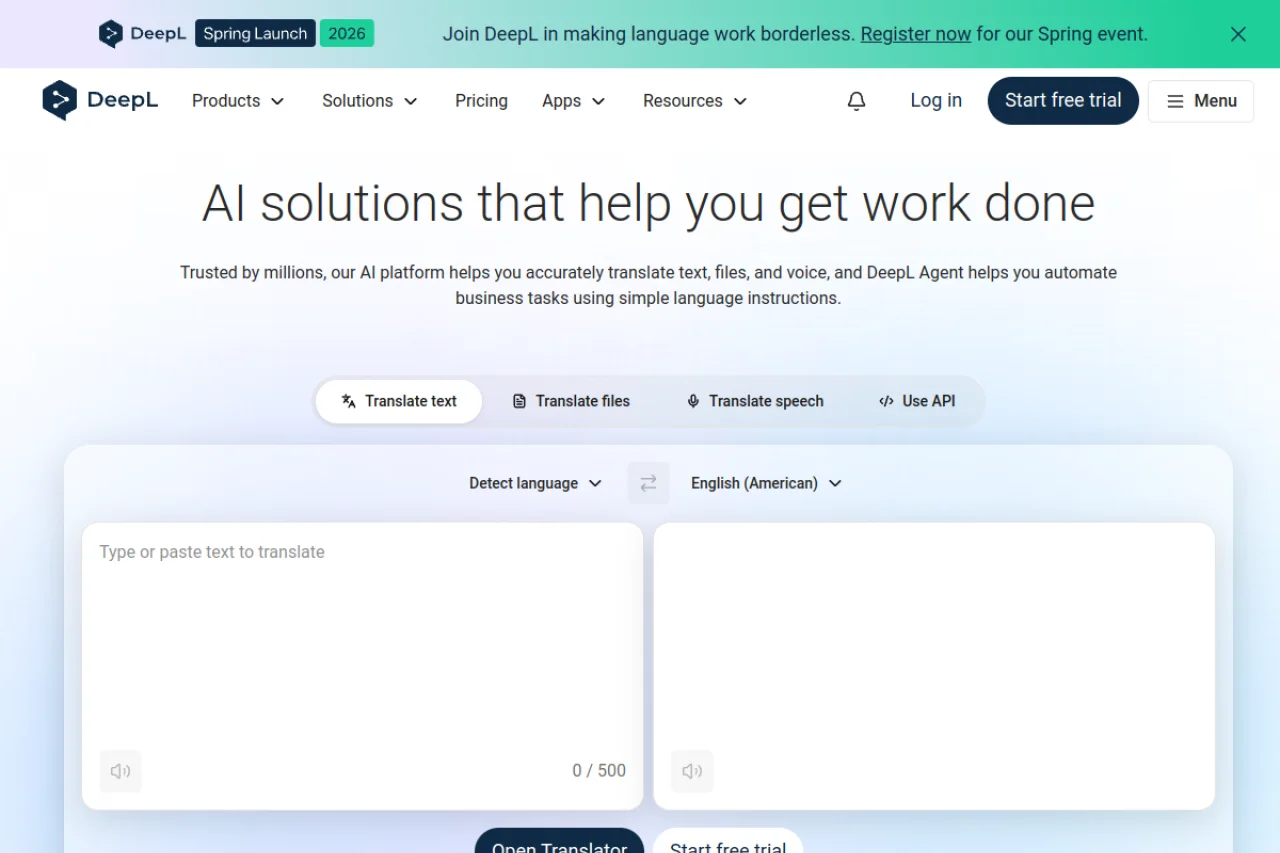
DeepL served as our primary translation engine, and it outperformed every alternative we tested by a meaningful margin.
The critical feature is not the translation quality itself — though that is excellent. It is the glossary function. We created glossaries for each language pair, locking translations for 87 brand terms, product names, technical concepts, and frequently used phrases. "Online tools" always translated to the same term in each language. "AI-powered" always used the same construction. "SEO" was never accidentally translated as "search engine" in contexts where the acronym was intentional.
Without glossaries, even the best translation engines drift over the course of a long document. A term translated one way in paragraph three might appear differently in paragraph thirty. Readers notice this inconsistency, even if they cannot articulate why the text feels off.
DeepL also preserves document formatting. We uploaded a Markdown file with headers, lists, bold text, and links. The output preserved every formatting element. This alone saved hours of manual reformatting per article.
Immersive Translation: The Bilingual Review Workflow
Immersive Translation enabled our quality review process in a way that a single-language view never could. Our workflow was:
- Open the original English article in the left panel
- Open the DeepL-translated version in the right panel
- Read both simultaneously, comparing sentence by sentence
- Flag any translation where the meaning, tone, or emphasis shifted
This bilingual review caught issues that a monolingual review would have missed. For example, in the German translation of an article about "remote team productivity," DeepL had chosen a word that carried connotations of "surveillance" rather than "collaboration." A native German speaker on our team caught it immediately in the bilingual view. A single-language review would have read as grammatically correct but subtly wrong in tone.
The lesson: machine translation gets you 90% of the way. The bilingual review gets you the remaining 10%. And that 10% is the difference between "this was obviously translated by a machine" and "this feels like it was written for me."
Trancy: Cultural Context, Not Just Words

Trancy is designed as a language learning tool, but we discovered an unexpected use case: cultural localization research. When we needed to understand how Japanese tech blogs discuss AI tools (the phrasing, the level of formality, the cultural assumptions), Trancy's learning mode helped our team internalize the communication style, not just the vocabulary.
This deeper understanding informed every translation decision. Should the tone be more formal in Japanese than in English? (Yes.) Should German marketing copy use a direct or indirect style? (More direct than English, surprisingly.) These are not translation questions — they are localization questions. And they cannot be answered by a translation engine alone.
Key Lessons From Translating 12 Articles Into 5 Languages
Lesson 1: Glossaries are not optional. Without locked terminology, your brand voice fragments across languages. Invest the time upfront to define every term you care about.
Lesson 2: Bilingual review catches what monolingual QA misses. Always review translations side by side with the original. One language at a time is not enough.
Lesson 3: Translation is not localization. Translating the words gets you a readable document. Localizing the tone, examples, cultural references, and formatting gets you a document that converts.
Lesson 4: Start with one language and do it well. We made the mistake of trying to launch all five languages simultaneously. The quality suffered. Iterate: do one language perfectly, learn from it, then add the next.
Lesson 5: Your international visitors can tell the difference. When translation is done well, nobody notices. When it is done poorly, everyone notices. The tools above give you the infrastructure to do it well. The commitment to quality has to come from you.
Read next: Your Site Loads Fast in the US but Crashes Abroad — Fix It Now